

Samsung’s Foray into Tri-Fold Smartphones: A Strategic Move?
Understanding the Context and Implications
As the global leader of the smartphone industry, Samsung will soon unveil their first tri-fold device, representing a major breakthrough in foldable smartphones. This is especially interesting since Samsung’s approach will reportedly differ from Huawei’s first-of-its-kind Mate XT, employing a “G-Type” rather than an S-shaped foldable form factor. But this raises one vital query: What strategic goals is Samsung trying to accomplish with such a new product?
Samsung’s tri-fold smartphone innovatively folds inward twice for reinforced durability and protected displays from harm. However, Huawei’s mate XT contrarily folds both inward and out for added versatility yet less safeguarding. Though Samsung’s inward-folding design more securely shields, it potentially constricts the apparatus’s flexibility when bisected unfolded. Approximately 300,000 of these groundbreaking gadgets are provisionally intended for debut in mid-2025, evidencing Samsung’s careful tactic to initially experiment before mass-market implementation. (Click here )
Strategic Implications and Market Considerations
The decision to produce such a limited quantity suggests that Samsung is treating this as an experimental product rather than a mainstream offering. This strategy aligns with Samsung’s recent approach to innovation, where it tests new designs in niche markets before scaling up. However, critics argue that Samsung should either commit fully to innovative designs or focus on refining existing products for broader appeal.
The high price and complicated design of tri-fold technology mean these devices will cost a lot more than current foldable phones, which could reduce their popularity and sales.
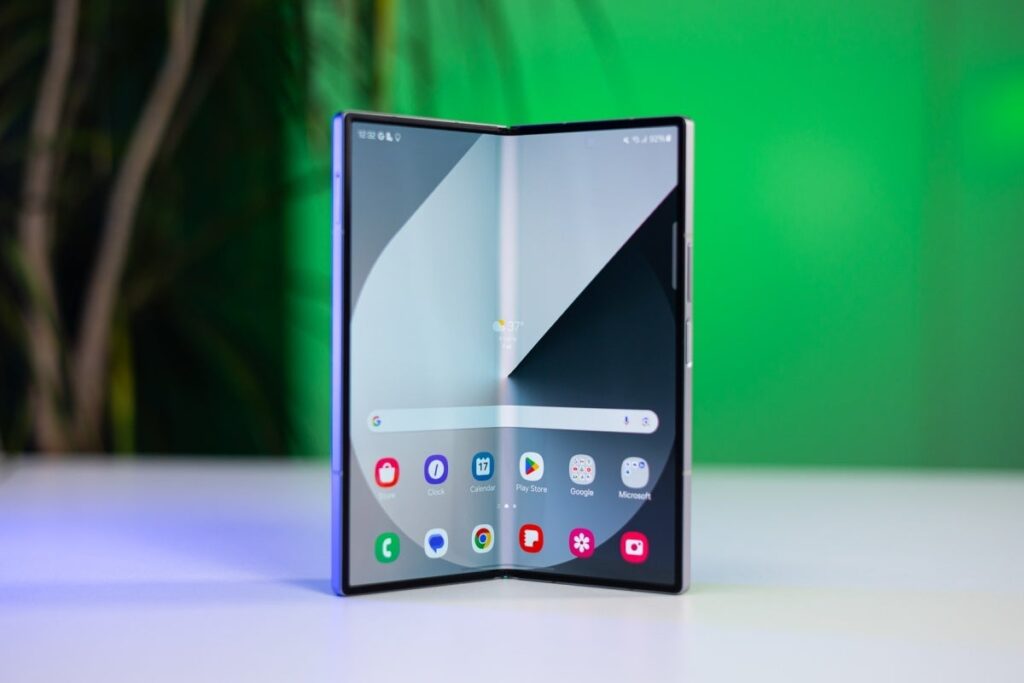
While Samsung’s experimental tri-fold device pushes the boundaries of what a smartphone can be, whether this vision of folding screens will appeal to consumers remains uncertain. The tri-fold phone showcases Samsung’s willingness to take risks and reimagine form factors, yet establishing wide-scale demand and refining manufacturing for these intricate designs presents challenges. As competitors likewise endeavor to shape next-generation folding phones, Samsung must demonstrate that its continuing evolution satisfies realistic needs as well as innovative aspirations. Whether their efforts translate foldable phones into a mainstream standard or a niche novelty will influence both their own prospects and the trajectory of this emerging category.