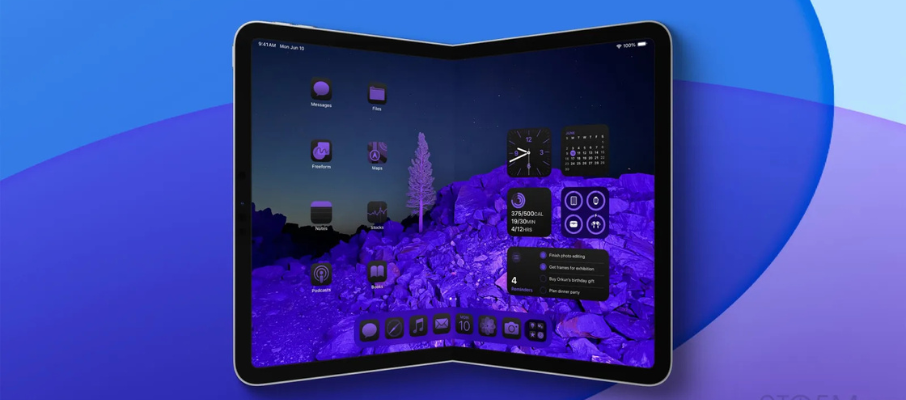
The Case for a Foldable iPad
Why a Foldable iPad Makes Sense
In a world where foldable phones are gaining traction, the idea of a foldable iPad stands out as a more logical evolution of Apple‘s tablet line. Unlike foldable smartphones, which often feel like a compromise between two devices, a foldable iPad could seamlessly integrate the functionalities of a tablet and laptop into one cohesive unit.While the concept of an iPhone that transforms into a mini iPad or a standard iPhone that folds in half may seem appealing, I find the notion of a foldable iPad far more compelling. Foldable phones, despite their innovative design, come with significant drawbacks. For instance, book-style foldables can feel awkward when closed and present a small tablet experience with an unsightly crease when opened—often at double the price of conventional smartphones. Flip phones, on the other hand, offer limited advantages aside from their compact size.Reports from Bloomberg and The Wall Street Journal suggest that Apple is indeed exploring the development of a large foldable device. Such an innovation could enhance the existing capabilities of the iPad Pro, which is already tailored for productivity, creativity, and entertainment. A larger, foldable screen would expand its functionality without forcing users to compromise between phone and tablet experiences.
Bridging the Gap Between Tablets and Laptops
The original iPad was designed to fill the gap between smartphones and laptops, and a foldable version could follow this trajectory by offering versatility between tablet and laptop modes. This would represent a natural progression for Apple’s tablet lineup since its inception nearly 15 years ago.While other manufacturers like Lenovo and Asus have ventured into foldable devices, Apple’s approach could set it apart. If Apple maintains its focus on user experience and integrates features that enhance productivity—such as custom accessories for the Apple Pencil—it could redefine how we use tablets.
Potential Challenges Ahead
However, creating a successful foldable iPad will not be without its challenges. Ensuring that the device effectively supports both compact tablet mode and expansive display mode will be crucial. Users will expect seamless transitions between these modes to maximize usability.Moreover, battery life will be a critical consideration. Early iterations of foldable phones have struggled with battery performance due to their design complexities. Yet, with Apple’s recent advancements in chip technology—specifically the M-series chips that power its high-end devices—the company may be well-equipped to tackle these hurdles.
Conclusion: A Promising Future
As Apple continues to dominate the tablet market, with over 31% share globally, it is uniquely positioned to introduce an innovative foldable device that appeals to consumers seeking versatility without sacrificing performance. While it remains uncertain when such a product might launch—speculated to be around 2028—anticipation for a foldable iPad continues to grow among long-time users who envision it as the ultimate solution for both casual use and professional tasks.In summary, while there are challenges ahead in developing a foldable iPad, its potential to transform how we interact with technology makes it an exciting prospect for Apple’s future lineup.